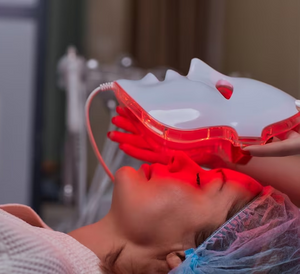
There are many potential uses and benefits of red light therapy. However, according to Elaine F. Kung, M.D., founder of Future Bright Dermatology in New York and assistant Quality Therapy Sweden clinical professor at Weill-Cornell Medical College, it’s important to keep in mind that many of the published studies using red light as therapy are often small (less than 30 people), animal or lab studies. As a result, most medical professionals agree that more quality research with more human participants is needed.
Preliminary scientific results look very promising, though. Here are some of the conditions that are showing potential for treatment with red light therapy.
Improvement for Skin and Hair Conditions
Using light to affect positive skin changes is not a new concept. In fact, dermatologists have employed various light wavelengths in treatments for over 50 years, explains Dr. Kung.
With this in mind, one of the most commonly cited benefits of red light therapy is improvements to the skin. “It has been used to address signs of aging and skin damage, such as fine lines, wrinkles and age spots by stimulating collagen production,” says Dr. Kelley.
Perhaps the most notable benefit of red light therapy is the improved quality and texture of the skin, according to Dr. Ilyas.
Relief from Chronic Disease Symptoms/Reduction of Pain
One potential application of red light therapy is to treat chronic pain conditions, such as fibromyalgia. Recently, the FDA approved FibroLux, the first and only therapeutic laser to treat fibromyalgia pain. “When red light therapy was administered via FibroLux laser by a health care professional three times a week for a three-week period, patients experienced a marked reduction in fibromyalgia pain,” says Dr. Eells.
Red light therapy may also reduce neuropathy pain, according to recent research.
Additionally, it may mitigate the painful side effects of some cancer treatments. “For example, a phase-three clinical trial showed the benefit of red light in reducing oral mucositis [tissue swelling and irritation in the mouth] in bone marrow transplant patients through an extraoral (outside of the mouth) application of only a couple minutes,” says Dr. Eells.
Enhancement of Fat Loss
Though red light therapy is being advertised for fat and weight loss, the jury is still out on this one. However, there are a few studies showing that the application of red light may affect adipocytes (the cells that store fat).
One older study published in the journal Obesity Surgery in 2011 found that when 40 adults with excess weight were regularly exposed to red light therapy, their adipocyte cells released triglycerides, resulting in fat loss. Participants in this study lost approximately 2.1 centimeters of girth over a four-week period[4].
Acceleration of Sports Recovery, and Injury Prevention
“Light can speed up the respiration process in cells and increase ATP and other mechanistic factors,” says Dr. Eells. “You stimulate cellular energy, and you stimulate the body’s ability to repair.”
Because of this, red light therapy may be promising when it comes to the treatment and prevention of a range of musculoskeletal conditions, including tendonitis and carpal tunnel syndrome.
Promotion of Brain Health
Research is increasingly demonstrating the benefits of using red light therapy for dementia, stroke, depression, anxiety and other brain conditions, explains Dr. Kelley. Continued studies indicate that brain photobiomodulation therapy may enhance the metabolic capacity of neurons and stimulate anti-inflammatory and antioxidant responses, as well as neurogenesis (the formation of new neurons). This may be particularly helpful for individuals dealing with memory or mood conditions.
 Site Title
Leave a comment